Integrative Oncology Case Experience – Shared by Dr. Mandeep Singh Malhotra
I would like to share one of our recent clinical experiences that highlights the power of Integrative Oncology—specifically the role of metabolic therapy when combined thoughtfully with conventional cancer treatment.
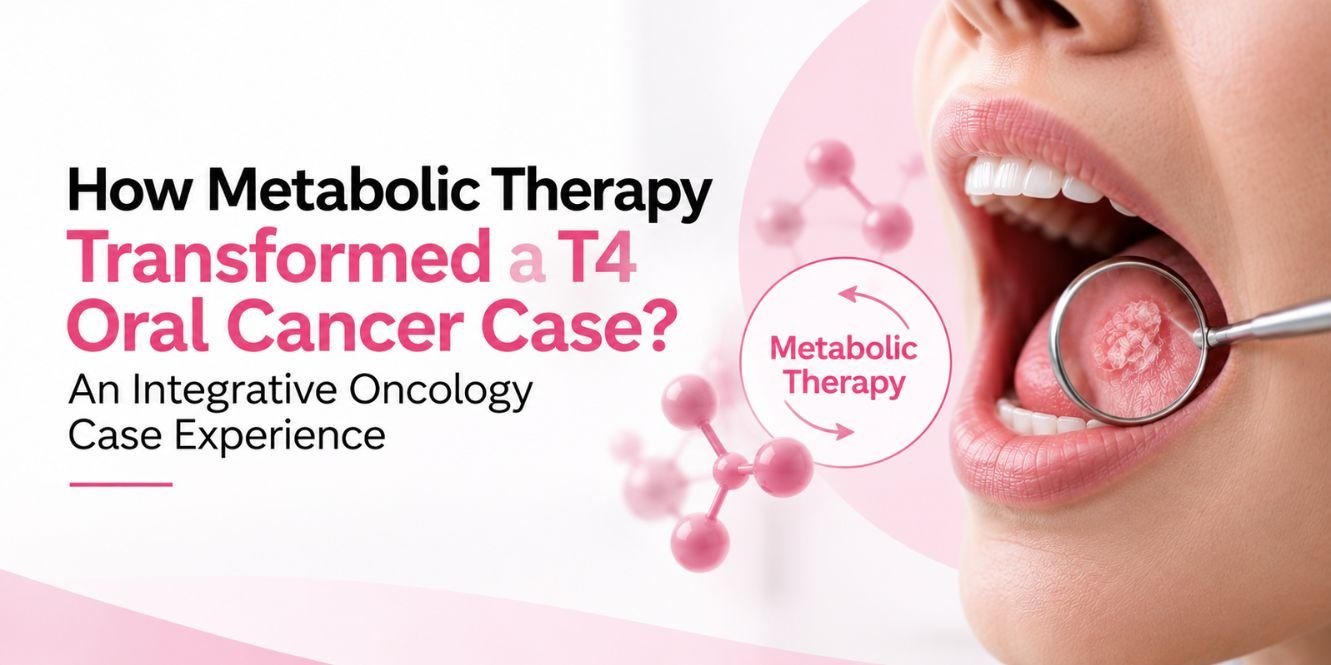
We were treating an elderly gentleman in his 70s who had multiple co-morbidities, including lung disease (for which he was on chronic corticosteroids) and underlying cardiac conditions. He presented to us with advanced oral cancer, clinically staged as T4 with suspected bone involvement.
Under normal circumstances, such a case would require a segmental mandibulectomy with major reconstruction, which can be extremely challenging in a patient of this age and medical complexity. Radiation therapy also had limited benefit in his scenario, and chemotherapy in oral cancers is often difficult for patients to tolerate with typically modest response rates.
Integrative Assessment & Metabolic Approach
We therefore performed a comprehensive evaluation using our integrative protocol. This included:
• Genomic and molecular profiling
• Target identification
• Assessment of suitability for immunotherapy
• Personalised diet and metabolic optimisation
• Superfoods and Ayurvedic nutraceutical support
• Carefully planned lifestyle and metabolic modifications
Based on this framework, we designed a six-week low-dose chemotherapy protocol, which the patient tolerated remarkably well—with minimal side effects, despite being on long-term steroids.
Outcome After Therapy
Following this metabolic-supported chemotherapy, we reassessed the tumour and proceeded with a conservative, local intra-oral surgery instead of a major resection.
To our pleasant surprise:
• Frozen section and final histopathology showed no bone involvement.
• Only small residual islands of disease were noted.
• We achieved a complete oncological resection.
• The patient recovered exceptionally well, with no functional impairment.
• He is speaking, eating comfortably, and overall doing very well despite his underlying medical issues.
Why This Case Matters
This experience reinforces an important message:
When metabolic therapy and integrative principles are combined with conventional oncology, the outcomes of standard treatments can improve—while toxicity and complications significantly reduce.
Because of metabolic optimisation:
• He tolerated chemotherapy better.
• Surgery became simpler, safer, and less extensive.
• Recovery was faster and smoother.
• Even our radiation oncology colleagues are now evaluating whether adjuvant radiation can be safely avoided in his case, given the excellent response.
This approach has also helped us better manage his existing heart and lung conditions, ensuring an overall improvement in quality of life and potential life span.
The patient is doing extremely well, and this result encourages us to continue expanding our work and research in Integrative Oncology.